News Feed

Greg Johnson – Personal Update 201504

Personal Update 201504 | 30 April 2015 | Thursday

20100104tu-gregory-johnson-by-makur-jain-IMG_1164-198x198-square

Greetings,

I hope you’re doing well. Thanks for taking a moment to read my latest update.

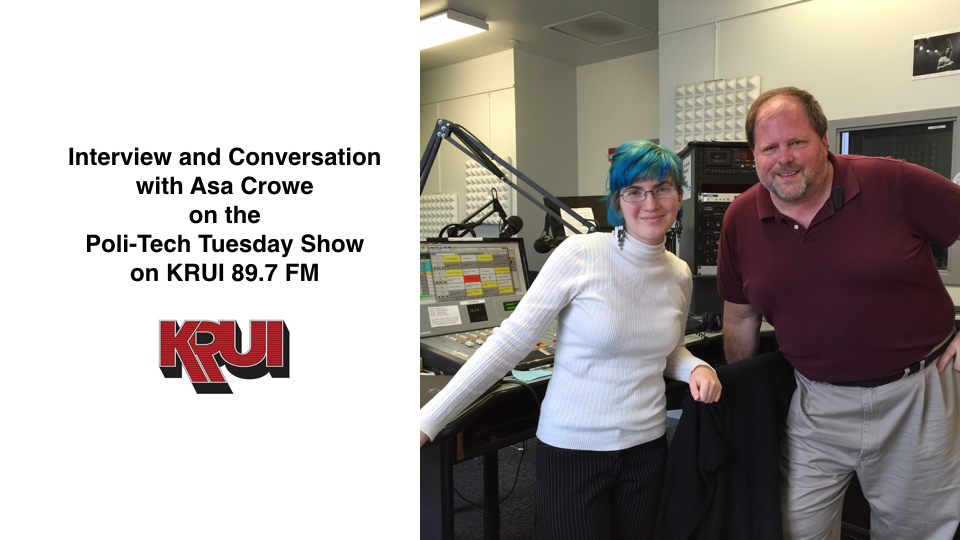
Technology. A few weeks ago, I had a nice radio interview with Asa Crowe on KRUI for the Poli-Tech Tuesday show. We had a good talk about various technology related issues. The show is available online if you’re interested in listening.

Health. I created a video that describes the current version of my wellness program. It’s about 30 minutes long. I hope to create separate shorter videos that go into more depth about each aspect of the program.

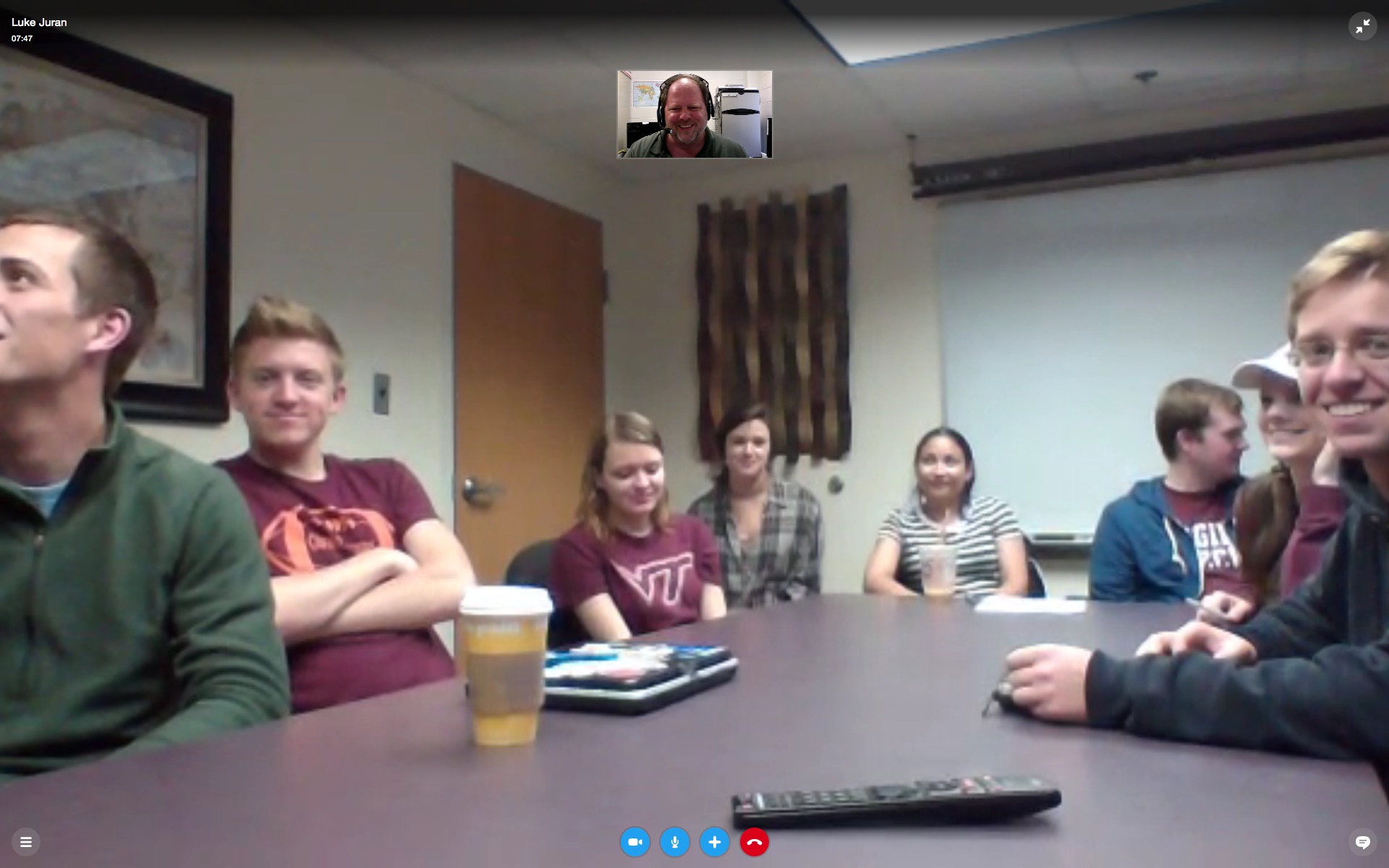
Small Houses. This past weekend, on April 25, I gave a small house presentation at the Big Tiny House Event hosted by Luther College in Decorah. It was nice to see the campus and meet so many enthusiastic small house people. On April 14, I was able to be a guest speaker for a sustainability course at Virginia Tech. They were interested in how small houses can benefit the environment. A few weeks ago, I did a Skype interview with Fox News New York that was included in a nice news segment about small houses.

Architecture. In 1984, I traveled to Central and South America as part of the South American Urban Studies (SAUS) program offered through the Higher Education Consortium for Urban Affairs (HECUA). From that experience and others, my interest in architecture and urban planning have grown, and small houses are a part of that interest. To me ‘architecture’ encompasses all aspects of how we plan, build, and improve the spaces we live in. As a photographer, I’m drawn to the patterns, texture, and lighting of buildings. As the manager for the Iowa City Architecture website, I enjoy aggregating local planning and development news. I also contribute some articles. My most recent writing, from this past week, is “Population Growth: To Build Up, or to Build Out.” I also created a video on the topic of ambient lighting in urban areas.

Goat Rental Business. On April 7, I began offering goat rentals nationwide through my Amazon store. You might enjoy the artwork I did for the campaign. It shows a goat being delivered by Amazon drone. I don’t personally have a herd of goats. I’m actually a reseller for people who offer the services. When you have an Amazon store like I do, you can sell anything offered by Amazon and make a commission.

Consumer Advocacy. This past month, the KIND Snacks company received a stern warning letter from the FDA. Apparently the FDA decided nuts aren’t healthy, and KIND was the company they chose to make an example of. I decided to do a little research into this, and my findings might interest you. You can click here read my report. It bugs me when a good company is getting bullied, so I decided to award KIND Bars an award for Most Nutritious Healthy Snack and Transparency in Labeling. It’s frustrating when the FDA uses taxpayer resources to launch a smear campaign against what is possibly one of the best natural raw foods providers in the nation. This is really an important story because every major news media outlet in the nation got the story wrong (reporting that KIND bars aren’t healthy), except for Huffington Post which reported “Why The FDA Action Against KIND Bars Doesn’t Mean They’re Unhealthy.” That headline should have been everywhere, but wasn’t.

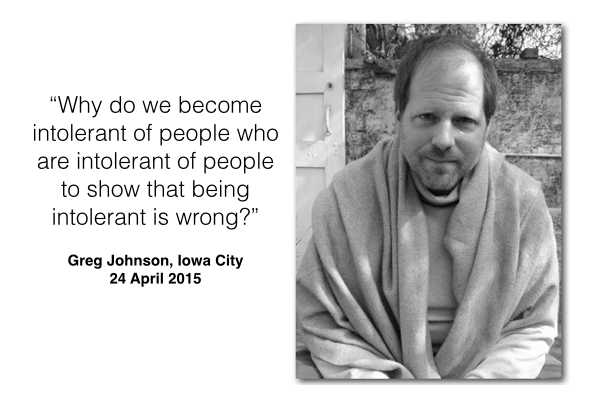
Reflections on Tolerance. It seems like there have been waves of news stories lately relating to intolerance in some form or another. On April 24, I wrote a short article on the topic of tolerance.

Advertising. Since I was young, I’ve had an interest in advertising. I continue to follow advertising news, and occasionally write about it. I like advertising that inspires and also ads that are funny. A few weeks ago I wrote about the latest Taco Bell ad campaign.  They created an elaborate video and launched two websites for the campaign.

Many thanks to all of you who keep in touch and provide support for the work I do.

~ Greg

__________

Origins. For those of you who are new to these monthly personal updates, they began over a decade ago out of a desire to share from my personal life about topics of lifeways, health, career, finances, relationships, effective living, and activism. This is based on the life map presented on the Resources For Life website.

Virginia Tech, Tiny Houses, and Distance Education in Higher Ed

Virginia Tech is utilizing distance education technologies to bring specialists into the classroom.  On 14 April 2015, I had the opportunity to be a visiting guest for a sustainability course taught by Luke Juran. Using Skype I was able to present and interact with the students in the course. Below is a photo from our Skype session.

20150414tu1413-distance-education-small-house-tiny-home-presentation

I’ve been inspired by the increased interest in tiny houses among students and faculty in higher education. Those focusing on sustainability and urban planning are incorporating smaller and more efficient living spaces into our built spaces. This tells me that we’re reaching a point of critical mass within the small house movement.

As a technology support specialist at the University of Iowa, I enjoy exploring how we can utilize technology for enhancing education. At the University of Iowa, through the Division of Continuing Education, courses are offered through Distance and Online Education.

Continuing education typically delivers certificates, degrees, and professional training to people with full-time jobs who do their studying in the evenings and weekends. In addition to schedule conflicts, people pursuing their career may find their ideal career location doesn’t put them close to the educational institution of their choice. So, distance education provides a great service.

In the past I assisted in teaching a course that utilized various classrooms on campus with multi-camera and multi-microphone systems to enhance the connection with an instructor in California.

More recently I had an opportunity to provide some technical support for a course being conducted by the University of Iowa, the University of Michigan, and Ohio State University. The course, Two Koreas: Political Economy and Regional Rivalry, had students on three campuses participating.

Combining the on-campus experience with efficiencies of distance and online technologies, creates the best of both worlds. The in-class experience gives students a chance to meet in person. The online component helps expand the campus to include a richer diversity of students and draw from a wider selection of faculty.

Tolerance of Those Who Are Intolerant, Racist, and Bigoted

Many years ago, I was walking to shul on Shabbos with a Jewish friend and we were discussing anti-Semitism. At the time, there’d been a rise in world-wide attacks on synagogues and an increase in anti-Semitic propaganda. We talked about the futility of direct engagement with hateful intolerant racists and bigots.

I looked at my friend and said, “I think the best response to anti-Semitism is more Judaism.” Having more people living an authentic and compassionate Judaism engaged in acts of kindness and Tikkun Olam is the best antidote for anti-Semitism.

I’m not Jewish, but over the years I’ve periodically participated in the faith and found it to be thought provoking, inspiring, and a source of wisdom for how to live a more abundant life. During times of persecution, being intentional about supporting and connecting with Jewish community seems like a good thing to do. Promoting acceptance and understanding is always a good choice.

A few years ago, in one community suffering from a wave of anti-Jewish attacks, hundreds of households put menorahs in their windows as a gesture of solidarity. This also made it difficult for any one household to be singled out.

Unfortunately, ignorance, bigotry, hatred, and intolerance seem to be part of the same parasitic disease that has continued to harm humanity over the centuries. We imagine that society will advance beyond these things. That’s the hope at least. Yet, dormant intolerance rises again, like some kind of recurring skin rash.

Today, hate crimes against blacks are on the rise. Innocent unarmed black people are getting shot in the streets in broad daylight. “Someone call the police!” might be a reasonable response, except it’s the police who are doing the shooting.

Muslims are probably tied for first place with regard to persecution and being misunderstood, at least in America.

The LGBT community continues to struggle for their rights in the face of intolerance and hatred.

What’s the appropriate response?

Negative stereotypes and misrepresentations in the news serve as fertilizer for hatred and misunderstanding. So, an appropriate and effective response is to flood the media and social media with positive images and positive portrayals of blacks, Jews, Muslims, gays, and people from any other persecuted or misunderstood minority group. This can help counteract the negativity of harmful propaganda.

It’s important for young people growing up to have healthy and positive views about themselves and others. If you’re part of a minority group — it’s important to grow up seeing that you are part of a group that is prosperous, successful, accepted, and respected.

Positive portrayals in advertising, movies, television, and popular media can go a long way to instill confidence in young people, as explained in this quote from Whoopi Goldberg:

“Well, when I was nine years old Star Trek came on. I looked at it and I went screaming through the house, ‘Come here, mum, everybody, come quick, come quick, there’s a black lady on television and she ain’t no maid!’ I knew right then and there I could be anything I wanted to be.” ~ Whoopi Goldberg

If you’re part of the majority, it’s important to have repeated positive images and portrayals of minorities that you might not otherwise have contact with.

A recent high profile incident regarding LGBT intolerance is the story about Memories Pizza of Walkerton, Indiana. This is the restaurant that refused to cater a same-sex wedding. Overnight, the small town pizza shop became the target of a verbal firestorm of vitriolic language expressing anger and hatred over their intolerance of same-sex marriage. Their Facebook page continues to be inundated with hateful responses to their position on same-sex marriage.

In the midst of the backlash of anger, a lesbian couple from California sent a $20 donation to the pizza shop. According to a report in the Huffington Post on 18 April 2015:

Courtney Hoffman, who is a California resident, said she hoped her $20 donation would be seen as an apology for the “hate and intolerance” that has been directed at Memories Pizza, and added that she “fully” supports the pizzeria owners’ right to “stand up” for their beliefs, TheBlaze first reported.

“My girlfriend and I are small business owners, and we think there is a difference between operating in a public market space and then attaching the name of your business to a private event,” she said in the interview, which can be found here. “If we were asked to set up at an anti-gay marriage rally, I mean, we would have to decline.”

Hoffman, who operates a small kettle corn stand with her girlfriend, also noted, “If we can remember that differences don’t equal maliciousness, and try to find what we have in common … maybe we can move beyond threats of violence and have open discussions of the things that we don’t agree on.”

Courtney Hoffman’s action above is an excellent example of effective activism. It’s also a genuine and sincere act of kindness that hopefully can open doors, build bridges, promote understanding, and bring about positive social change.

It’s probably human nature to respond ‘in kind’ to whatever comes our way. If someone yells at us, we yell back. If they call us names, we call them names. The problem, of course, is that this causes us to get sucked into engaging in the very same behavior that we’re protesting.

It turns out that the owner of Memories Pizza is not vehemently anti-gay, but simply doesn’t support gay marriage. While that may sound moderately anti-gay to some people, there is a difference. Had the pizza owner met some nice married gay couples, he might have changed his stance on gay marriage. Unfortunately, voices of reason and and understanding were drowned out by all the hateful responses.

In the midst of these conflicts, I wonder to myself, “Why do we become intolerant of people who are intolerant of people to show that being intolerant is wrong?”

Courtney’s example reminds us to take the higher road. We can stop protesting what we’re against and instead boldly and bravely live out what we are for.

20150424fr-greg-johnson-why-do-we-become-intolerant-600x400

__________

Additional Reflections

It’s relevant to point out that there’s a growing subculture of conservative evangelical Christians who probably feel that they are a misunderstood minority — being portrayed by the media as an extremist and hateful people who are bitter and “clinging to guns or religion.”

In April 2008, President Barack Obama stated about evangelical conservatives:

“…it’s not surprising then that they get bitter, they cling to guns or religion or antipathy to people who aren’t like them or anti-immigrant sentiment or anti-trade sentiment as a way to explain their frustrations,” (source)

Obama isn’t alone in this viewpoint. His statement reflects how conservative evangelicals are often portrayed by mainstream media.

In the same way the media focuses on Muslim religious extremists and militants, it also focuses on Christian religious extremists and militants. Religious conservatives (of any religion) are generally portrayed as angry, isolated, uneducated, and bitter — a group that nobody would want to belong to.

Interestingly, what are perceived to be the most ‘religious’ evangelicals are actually very outspoken against religion. There’s a belief among many Christians that religious structures of worship, thought, interaction, and living hinder the influence of the Holy Spirit. The subtleties and nuances of the faith and ‘a relationship with Jesus’ are found in living out a less religiously-structured worship and life of faith. Religion with its huge administrative top-down institutions, detailed doxology, and written prayer books becomes something larger and noisier than the still small voice — and thus a distraction.

In an interview on the Jon Stewart show, Mike Huckabee proclaimed “I’m a conservative, but I’m not angry about it.”

Huckabee was known for that statement because he’d use it in may speeches and television interviews. It was an important clarification to make since people like him are otherwise being portrayed as angry at the world.

There are many evangelical conservatives who aren’t uneducated, angry, or bitter. They just want to have the freedom to live their own life in a conservative religious way.

So, ironically, a group that’s often portrayed as the oppressor (conservative evangelicals), actually isn’t that large in number and is itself in danger of being an oppressed or misunderstood minority group. In some respects, conservative evangelicals are an endangered sub-culture that no longer have a cultural ecosystem to support and affirm its existence.

It’s not the case anymore that “the man” is keeping a certain group down, but we have disagreeing factions of minority groups and special interests who are all to some degree oppressed by another — fighting over jobs, political influence, and power.

The Importance of Digital Storytelling Through Social Media

Digital storytelling through social media is increasingly becoming an essential component of outreach for organizations and businesses. It’s especially important in higher education.

  • Informing. It’s how we inform the public and those within our institution about the work we do.
  • Hiring. It’s how we get the attention and interest of potential staff and instructors seeking employment.
  • Recruiting. It’s how we reach prospective students.
  • Fundraising. It’s how we inspire alumni and others from the community to give.
  • Motivating. It’s how we inspire ourselves to be encouraged about the work we do.
  • Documenting. It’s how we journal our experiences to create a collective institutional memory and history. These stories can document the what and how of processes.
  • Educating. In addition to telling stories, we can share about the process. This becomes an educational, transparent, and open-source way of equipping others to tell their stories.

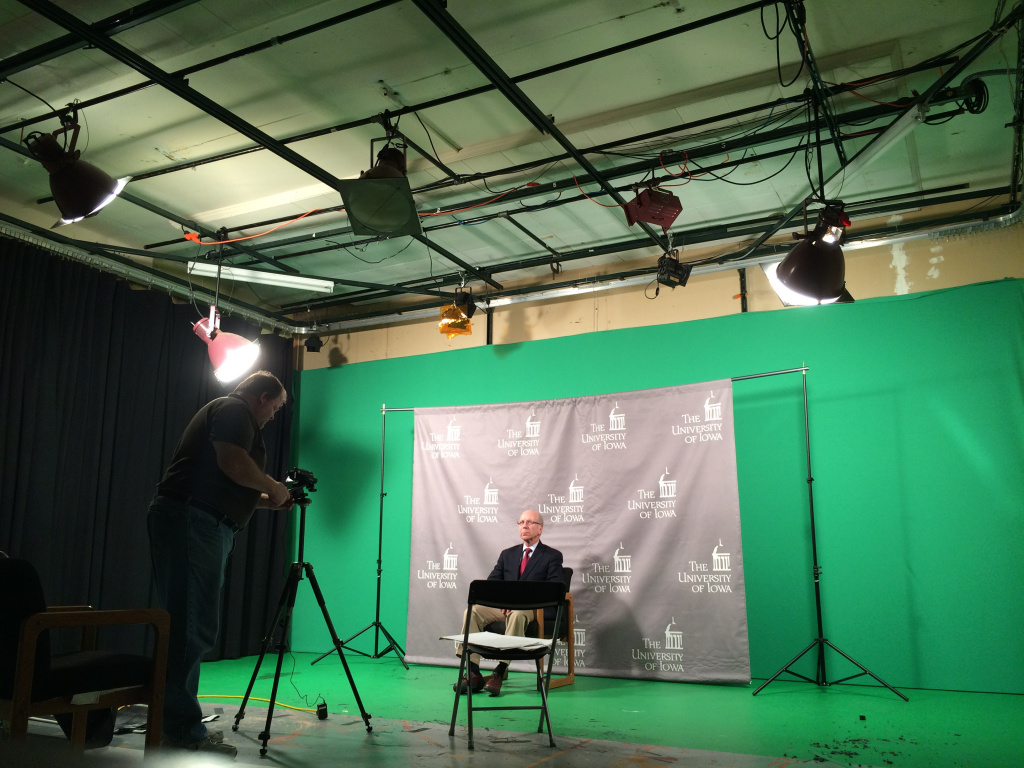
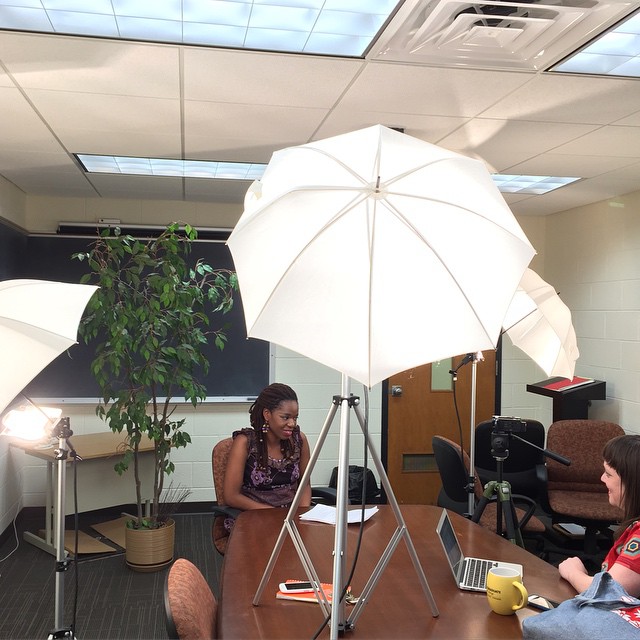
Below are some photos from recent work I’ve been doing in the area of digital storytelling, and sharing the behind the scenes experiences of how we’re documenting our work — what technology and process is used.

20150205th-michael-ohara-uiowa-professor-psychology-img_2307-20141110mo1109
Michael O’Hara (center). Greg Johnson (behind camera at left). Developing an informational video for the Marcé Society.
Neema Loy shares about her @FulbrightPrgrm experience @UIOWA teaching ‪#‎Swahili‬ with the @DWLLC_UIOWA

Ambient Light Planning for Urban Public Spaces (Video)

[youtube=https://www.youtube.com/watch?v=qtMTvvv4fC0?rel=0]

Greg Johnson of IowaCityArchitecture.com discusses strategies for managing ambient natural light in urban and public spaces.

This is a companion video to the article on urban planning strategies to enhance available light. The image below and other examples can be found in the video.

20140724th-iowa-city-urban-natural-lighting

DIY Glucose Stress Test Results

Amazing! Just did a DIY glucose stress test with 47 grams of highly bioavailable liquid caffeinated sugar (one bottle of Starbucks Mocha Coconut Frappuccino) and two Dark Chocolate Kind Bars (32 grams of carbs). Over 100 grams of carbs in the past few hours. Glucose levels barely increased. This indicates healthy glucose control and proper insulin response. Learn more http://wp.me/p4ilax-h8

20150327fr1719-diy-glucose-stress-test-IMG_0110

Open-Source, Public Domain, Open Access, Collaborative, Universal Design Wellness Protocol

I’m excited to be developing an open-source, public domain, open access, collaborative, universal design wellness protocol to simultaneously address various health issues such as high blood sugar, high blood pressure, high cholesterol, and obesity. The glucose numbers you see below of 87 and 88 were over 300 about 7 weeks ago. Over the same time period, I’ve lost about 14 pounds. Blood pressure, once at 141 over 90 is now down to 118 over 79. More astonishing results to be posted in the weeks to come. Thanks to everyone who has contributed to the project so far. You can read my latest post online at http://wp.me/p4ilax-h8

20150326th1232-glucose-blood-sugar-results

Radio Interview with Asa Crowe on the KRUI Poli-Tech Tuesday Show

I had the pleasure to be a guest on the Poli-Tech Tuesday show on KRUI with Asa Crowe and Arianna Chronis. In about 30 minutes, we covered technology on campus and a lot of other topics. The interview is available below. Click the play button to listen.

About the Interview

I was a sophomore at the University of Iowa when KRUI was launched. As IOWA alumni, it was meaningful to be at the station today during the weeks leading up to their 30-year anniversary celebration.

It was nice to have a chance to visit with Asa about the various technology resources available on campus. Here are some of the topics we discussed during the interview, and links to further reading:

  • Flipping the Classroom – We discussed the approach to instruction that involves delivering lectures and course content online outside of class time and focusing class time on interactive, participatory, and engaging learning activities.
  • GarageBand – An Apple program for multitrack recording and music composition on desktop computers or iOS touch interface devices (iPhone, iPod, iPad).
  • ITS Help Desk – The central source on campus where you can get support for all things tech.
  • Language Media Center – A computer and technology lab on campus for language learning and media services. The LMC is part of the Division of World Languages, Literatures & Cultures.
  • Lynda.UIOWA.edu – Over 100,000 video tutorials on topics such as: Microsoft Office products (Word, Excel, PowerPoint, etc.), Microsoft Windows and Mac OS, Adobe Suite (Acrobat, Photoshop, etc.), Apple products (iPad, iPhone, etc.), Web and mobile app design, Development and Programming, Google Products, Time management, running effective meetings, and Business skills (leadership and manager fundamentals, etc.).
  • Online Education @UIOWA – The University of Iowa offers Distance Education and online learning opportunities. This is explained on the Continuing Ed website as follows: “Online. On campus. On location. This phrase describes what Continuing Education at Iowa stands for: providing access to a nationally-ranked public institution to as many people as possible. In addition to where you take your course, there are a variety of ways the course is delivered. Many distance courses use the Internet to deliver course work to your desktop. Some distance degree programs or courses are offered on-location, such as Cedar Rapids, Des Moines, the Quad Cities, Sioux City, and Iowa Lakeside Laboratory in northwest Iowa. While still others are offered at the Iowa City campus, many at nontraditional times. Distance courses vary in delivery format and are supported with various technologies. Some are structured so you can complete them at a time that is most convenient for you (like our Guided Independent Study courses), while others provide a more specific set of deadlines and opportunities to collaborate with classmates.” [Facebook]
  • Stanford Open University – An example of higher education courses and reading materials made openly available to the public.
  • Tech Connection – The University of Iowa Bookstore computer center and authorized Apple repair center. [Facebook]
  • Two Koreas: Political Economy and Regional Rivalry – A course being delivered collaboratively by the University of Iowa, Ohio State University, and the University of Michigan. This is a CourseShare course offered by the Committee on Institutional Cooperation (CIC).
  • UI Capture – The University of Iowa lecture capture system that provides recordings of the audio, PowerPoint presentations, and other content from class lectures.
  • University of Iowa Photography Club – The UIPC has over 500 members on their Facebook Group page. Their organization page is just over 260 likes. The club offers various opportunities to meet other photographers, participate in photography events, and learn at workshops and presentations. The Iowa City Photographers Guild is another local photography group.

Music

Below is a video sample of my music and photography. The song is “Arpeggio Rising.” The photos are from 28 days in India. More of my music is available on ReverbNation and SoundCloud.

[youtube=https://www.youtube.com/watch?v=wQbLbdAFPWE]

Thanks For Sharing

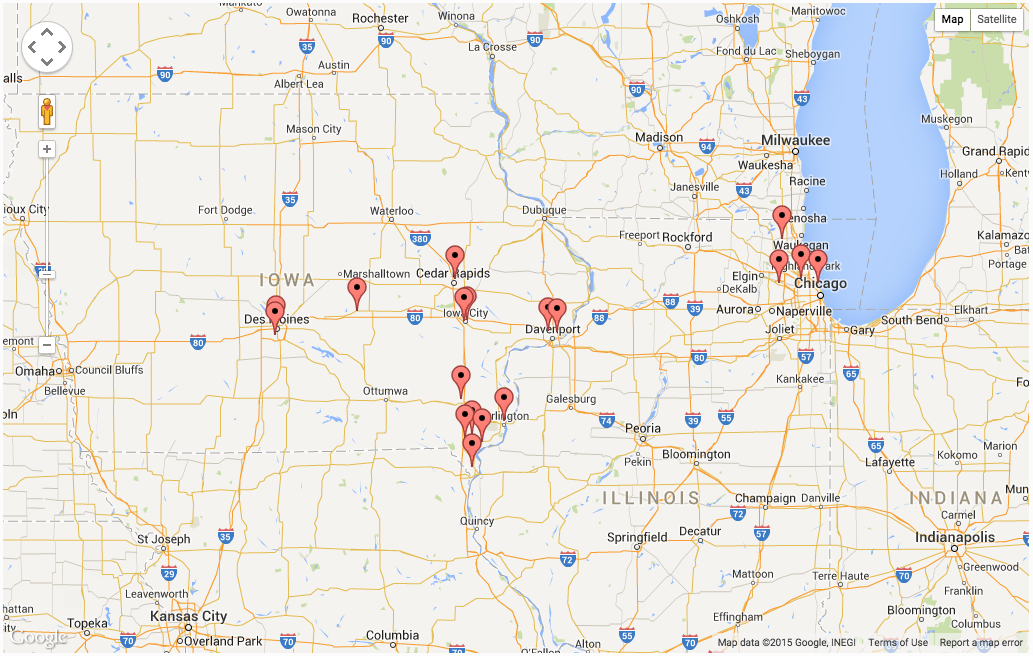
I appreciate the interest everyone has had in this story, and those who have shared this post on Facebook and elsewhere. The maps below show recent visitors to this page. Click any map image for a larger gallery view.


20150324tu-poli-tech-tuesday-krui-greg-johnson-asa-crowe-960x540

What I Learned as a Radio Shack Store Manager

In the fall of 1986 I completed my undergraduate studies at the University of Iowa. With a B.A. in Spanish, and having taken some courses in computer science, I wasn’t sure what my job prospects would be. My girlfriend at the time graduated a semester earlier than I, and had already moved to the San Francisco Bay area where we planned to live.

In December, shortly after graduating, I decided to start job hunting in California. At that time, the job market was tough, and finding something wouldn’t be easy. I had the disadvantage of not being there, and was without any connections in the area.

I looked at the job listings for the area. “Where to begin?” I thought, looking at the various positions available. In that moment, I knew what I wanted to do. Instead of taking what was available, Based on my own interests, I’d choose what business I wanted to work for and then see if they would hire me — even if no job openings existed. This was a strategy that worked for me on several occasions.

Back in 1979, about 7 years earlier, I was in 9th grade, and Radio Shack began selling the Tandy TRS-80 Model I computer. I’d always had an interest in audio systems and electronics, so I’d spend a lot of time at the Radio Shack stores learning about the latest gadgets, tools, and supplies. With computers now available in the store, I began spending a considerable amount of time there, writing software programs on the store computer. Before too long, I knew the store and products fairly well. I got to be a ‘regular’ in the store, and would sometimes help customers. I enjoyed engaging with customers and finding solutions to their needs.

Reflecting on this experience, I decided to see if I could get a job with Radio Shack in San Francisco. I called a store in the area to get the name and phone number of the district manager (the DM). His name was Steve. We ended up talking on the phone, and when he found out I was fluent in Spanish, had computer skills, and was from Iowa, he hired me over the phone to begin immediately — in the Mission District of San Francisco.

Mr. Nguyen, the manager of the store where I first worked, was from Vietnam. I was an assistant manager with hopes of having my own store one day.

Mr. Nguyen was an excellent manager to train under, and we had a really good team at the store. At that time, just about everyone worked on commission. Any tasks not related to making sales, became less of a priority. Cleaning the store, receiving orders, putting merchandise on the shelves, and helping customers with returns or repairs were less desirable tasks since employees weren’t rewarded for these tasks.

As an assistant manager, I was often left managing the store on my own. I decided to create multiple ‘departments’ in the store. So, when a customer needed repairs, rather than being left sniffing their underarms wondering why all the sales people were avoiding them, I’d immediately greet the customer saying, “Welcome! Let me have you work with Bob in our repairs department.”

There was a measure of absurdity in my assertion that we had departments in the store. Radio Shack isn’t JC Penny or Sears, but I wanted to step it up a notch. So, we had a ‘receiving department’ and a ‘custodial department.’ By giving employees accountability over each area, rather than trying to avoid tasks, they took ownership of them.

Based on how well they were doing in their respective areas of responsibility (those tasks with no commission or reward), I would make sure each employee was compensated. I’d wait until I had helped a customer with a huge sale, like a computer or home entertainment system, and then I’d ask Bob to complete the order. That meant Bob, our ‘repairs manager’ would get the commissions for that order.

I wasn’t too concerned about losing income. With so much experience in Radio Shack stores, I’d become a kind of Dancing Wu Li Master of sales. I had memorized every product in the store, and knew the catalog cover to cover. As if by magic, the pages would open to the product I was looking for.

Radio Shack had a training program called the 15 steps to selling. It was quite good, and done right actually could be an effective way to meet people’s needs without selling them stuff they didn’t need. Several of us decided not to focus on maximum sales (and income) but to focus instead on meeting people’s needs, and letting income take care of itself. This approach worked and people flocked to our store.

When a customer would walk in the door, they would begin saying something like, “Do you have…” or “I’m looking for…” and I would cut them off mid sentence and say, “Yes, we have that.” It was mostly for theatrics. Perplexed, they’d continue explaining their need as I gestured them to follow me. Listening to them closely, I’d navigate to the place in the store where we needed to be so that by the time they finished talking, I’d be standing in front of the very product they were looking for, and with a game show host hand gesture, present the item to them.

Occasionally my little stunt would backfire, and the customer would describe something we didn’t have the the store. The other sales people would look on, thinking, “What’s he going to do now?” I was determined to help everyone that came in the door. Sometimes it meant creating a solution by combining adapters and cables to do what the person wanted to do. On one occasion, I had to purchase a soldering kit to solve a customer’s need.

Because sales and commissions weren’t our first priority, and helping the customer was our focus, it didn’t matter how small the item was, or how long it might take to help the customer.

There was a rare occasion when we actually didn’t have what they were looking for. We’d never say, “We don’t have that. Sorry.” Instead, we’d get on the phone and find it for them.

I enjoyed the selling process, and finding just the right product for people. Sometimes we’d be out of a product. “We have just what you need,” I’d say confidently walking toward the display area. Then I’d wave my hand presenting the empty space on the shelf, “What you need is the XB500,” and with much enthusiasm I’d begin to describe all the features the XB500 had to offer. “I’ll buy it!” the customer would say. The entire sales process would transpire without a product. As a neighborhood store, people were happy to stop back a day or two later for items that needed to be ordered.

To make the job a little more fun, we’d use some hackneyed sales techniques and phrases, with exaggerated delivery of lines — like something out of a 1950s television commercial.

The District Manager would stop in and visit us regularly. So, he saw many of these antics, but acknowledge that although our approach was unconventional, it was effective.

Working with Radio Shack, normally it takes two or three years to get into your own store. The training process is lengthy, and a store needs to be available. Within about six months, I was promoted to manager and given my own store in Daly City.

It was a very narrow store with two levels, and not an ideal location. Next door was Matthew’s electronics and entertainment megastore. Inside the store, customers would be given wine and cheese, along with other hors d’oeuvres. Anyone purchasing a television or stereo system would be given a fully assembled bicycle. Matthew’s had a huge advertising budget, and their television commercials from the 1980s can still be found on YouTube.

One day I visited their store. “We’re not in the Mission District anymore,” I thought to myself as I looked around at one of the most impressive displays of electronics I’d ever seen.

“How could I compete with these guys?” I thought.

I saw this as a challenge and growing opportunity. As a teenager, I worked at my mom’s family business an learned a lot of good lessons about hard work and customer service. My mom and step-dad were two of the most successful business people I’ve known — measuring success by how well we care for and serve others. I knew if I could focus on meeting people’s needs, I’d do just fine managing my own store.

Matthew’s brought in customers from around the area who wanted to benefit from their selection and low prices. Sometimes the line would go out the door. Those who were impatient would visit my store instead.

Occasionally I’d get customers in my store because Matthew’s didn’t have what they were looking for. Sometimes I’d replied customer, “Yes, they have that. It’s near the speakers in the back on the right.” I’d memorized their product line and the location of all their merchandise, so sometimes I knew how to find items that newer sales people might not have known about. In these situations, I’d look to my employees and say, “I’ll be right back.” I’d then take the person over to Matthew’s and help them find what they were looking for — all while wearing my Radio Shack Store Manager name tag. The guys at Matthew’s found this quite entertaining. It helped defuse any competitive spirit between our stores. Eventually I had Matthew’s sending me their customers.

Whenever I didn’t have a product someone was looking for, I would continue the sale next door at Matthew’s.

A challenge for my little store was that to get to it from any distance, a person would drive by a dozen other Radio Shack stores. So, to broaden my store’s customer base, I had to do something extraordinary. Over time, word got around and people knew they could get an extra measure of service at our store. We’d get people from as far away as Oakland who would come to have their technical problems solved.

On one occasion, an elderly woman came into my store in search of a phonograph needle that would play 33 and 78 rpm records. Sometimes finding the right needle for a record player would take some effort. It wasn’t always clear what needle would fit. I’d maintained the policy of putting customer needs above commissions, so I wasn’t concerned that this $1 sale might take considerable time. At that moment, I’d be earning about 15 cents per hour. It didn’t matter. I patiently helped this woman, who was very grateful. In fact, she was so grateful that she wrote a letter to Tandy Corporation Headquarters in Texas. That letter got back to my District Manager.

That was a highlight of my career with Radio Shack, and a good way to start off my professional life as a young adult.

I still think back on everything I learned through these various experiences and try to apply those lessons today.


20150315su-radio-shack-store-front